Cooking calculators
A practical AI Love Food guide for cooking calculators, with a clear answer, examples, limits and related AI Love Food routes.
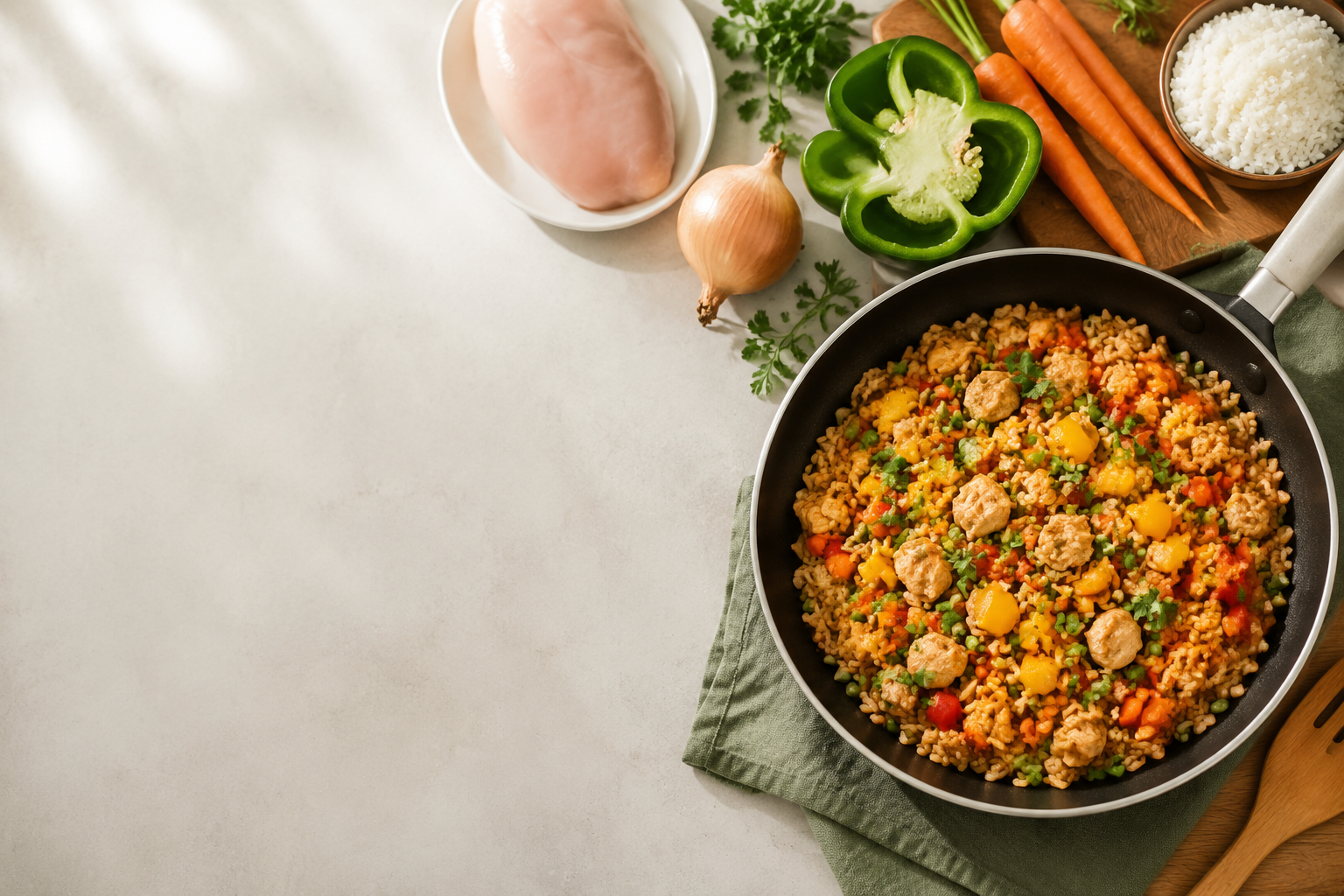
Find the right cooking calculator, understand its inputs and formula limits, and use its result as a transparent planning aid rather than a guarantee. This private cornerstone record is deliberately more explanatory than an index card: it gives the reader a way to choose a route, inspect assumptions, and know when to stop. It does not claim that every linked record is authored, reviewed, or published. The page-level review status remains visible because a useful public promise must match the inventory behind it.
Reader promise and scope
Open by naming the real decision a reader is trying to make about cooking calculators. Promise a calm, practical route from a question to a next action, without pretending that a collection page can replace personal judgement or a safety authority. Explain what the page includes, how its links are organised, and what it deliberately does not do. Use short paragraphs, descriptive subheadings, and examples that show a reader how to use the inventory. Keep quantities, temperatures, dates, prices, dietary suitability, and storage limits conditional unless the underlying record has been checked.
The page should help a beginner start quickly while giving an experienced cook enough detail to choose, compare, and return later.
How to navigate the collection
Describe a repeatable browse path: identify the occasion or constraint, narrow by the relevant category, open the detail page, then check its assumptions before acting. Explain that a linked calculator is an aid to arithmetic, a recipe is a set of instructions, and an index is a discovery tool; they are related but not interchangeable. Include a compact “start here” example and a second example for a reader with a different budget, appliance, skill level, or dietary requirement.
Tell readers to record the assumptions that matter, such as number of diners, raw versus cooked weight, pan dimensions, or the state of a leftover. Avoid claiming that a route contains an item until inventory confirms it.
Practical decision framework
Give the article a useful framework rather than a list of slogans. Ask what must remain constant, what can flex, and what should stop the process. For food, texture, acidity, moisture, heat, time, and portion size often explain why two apparently similar choices behave differently. Distinguish a convenient approximation from a tested result. Show readers how to compare two options using the same criterion, and invite them to make one change at a time. Where the answer depends on equipment, packaging, local convention, or an individual’s needs, say so plainly.
Mark every claim that needs a source as “Source check required” in the draft and reserve confident language for information verified in the relevant inventory record.
Concrete examples to commission
Commission examples that contain inputs, a decision, and an observable result. A good example says who is cooking, what they have, what they need, which route they open, and what they check next. Include a small household example, a larger gathering example, and a recovery example where the first choice is unavailable. Keep examples realistic and avoid implying that one family, culture, budget, or kitchen is universal. ” For safety topics, examples must stop before an unsupported go/no-go conclusion; the reader should be directed to verified guidance and told which fact still needs checking.
Accessibility, language, and presentation
Use plain language, define specialised cooking terms on first use, and put the action before the explanation. Tables should have meaningful headings and should not be the only place a warning appears. Write link text that identifies the destination rather than saying “click here.” Keep alternatives visible for readers who measure by weight, volume, or temperature scale, while never implying that conversions remove the need to follow an appliance’s instructions. A screen-reader user should be able to understand the hierarchy from headings alone. Avoid idioms that hide a caveat, and make any uncertainty as prominent as the main recommendation.
Quality checks before handoff
Before handoff, compare the title, primary keyword, route, and promised task with the manifest. Check every internal link against the current inventory, remove links to drafts that are not intended for this page, and confirm that examples do not quietly introduce unsupported ingredients, prices, or health claims. Recalculate any displayed arithmetic independently. Check that the copy distinguishes raw, cooked, drained, prepared, and ready-to-eat states. Search for absolute words such as “always,” “safe,” “guaranteed,” and “perfect,” then replace them or attach evidence.
Finish with a visible editorial note listing source-dependent claims, open questions, and the person or role that must review them later; do not invent that person now.
Voice and evidence markers
The voice should be useful, modest, and specific: explain the reason for an instruction, then give the reader a manageable next step. Do not use confidence, warmth, or a long introduction to conceal missing evidence. ” Place the marker beside the relevant claim as well as in the final review list, because a copied paragraph can otherwise lose its context. A source marker is not a citation and must not be styled as one.
The final page may replace it only after an editor verifies that the evidence supports the exact wording, conditions, audience, and region. Keep links helpful but never let link density substitute for explanation.
Measurement and maintenance
Define success as a reader completing the intended task with fewer hidden assumptions, not as a particular number of clicks or a promise of a perfect result. Ask the publishing team to monitor broken routes, missing records, confusing labels, and questions that reveal an unclear boundary. Do not state performance metrics that have not been measured. When inventory changes, update the relevant link and recheck the surrounding sentence; a valid route can still become misleading if its title or scope changes.
Preserve the brief’s open questions in the handoff so a later editor knows what remains unresolved. Keep this content private and Draft until the manifest, inventory, sources, and approval state agree.
Calculator map
Group tools by decision: servings and portions, conversions, appliance changes, baking geometry, dough percentages, cost, and dates. Each card should state the input, output, unit, and one assumption in plain language. Include the route to the tool, not a hard-coded result that can drift from its formula version. Explain why a calculator designed for recipe servings should not be used to estimate meat yield or food-safety time.
Show the arithmetic
Commission one worked example per calculator family. Show original servings and target servings, input units, rounding, and the final result. For pan conversion, explain area rather than treating diameter as a linear quantity. For dough, distinguish baker’s percentages from a household volume measure. A reader must be able to spot an implausible output and return to the input rather than trusting a polished number.
Uncertainty and appliance variation
State that conversions and estimates cannot account for every ingredient density, pan material, oven calibration, air circulation, package label, or personal portion. A result is a starting point. Link onward to the relevant recipe or guide where technique matters. Keep safety decisions outside the calculator unless the formula and evidence have been explicitly approved for that purpose.
Accessible tool handoff
Describe labels, units, keyboard operation, and error messages that the finished UI must provide. The editorial page should explain what to do when a reader does not know an input, rather than silently selecting a default. Examples should include metric and imperial contexts without claiming a region’s convention is universal. Ask the reader to retain the displayed assumptions when sharing a result.
Start with a route that matches the decision
Use the links below as a controlled path through the inventory. The anchor describes the destination and the purpose explains why it belongs here. A link is helpful only when the destination’s title, status, and content still match the sentence around it.
recipe serving scaler — Scale ingredient quantities to a stated yield.cups to grams converter — Convert a named ingredient with density caveats.baking pan size converter — Compare pan area and capacity assumptions.leftover date tracker — Record a date without presenting it as a safety verdict.Practical boundaries
- Calculators must not diagnose doneness, spoilage, allergy risk, or safe consumption.
- Do not hide rounding, defaults, formula versions, or missing inputs.
- Do not claim calculator output is validated for every recipe, appliance, or ingredient.
Source-dependent claims
The following claims depend on the named sources and should be applied only within their stated scope: Formula rationale, safety windows, and appliance conversion claims require source and formula review. Any claim that a tool is accurate, tested, or suitable for a special diet remains source-dependent.
cornerstone hub — Open this related food guide for the next practical decision.Previous: Ingredient substitutions — Open this related food guide for the next practical decision.Next: Food storage guide — Open this related food guide for the next practical decision.editorial methodology — Open this related food guide for the next practical decision.food safety sourcing standards — Open this related food guide for the next practical decision.